

Can’t sleep after a bad argument? – 10 Things to get you back on track
Jason Wooden, PhD and Kristal McKinney, LICSW, CMHS | October 25, 2026
In this article, we talk about:
1) When you’re laying in bed sleepless after an argument
2) What an argument does to your sleep
3) How your sleeplessness can make things worse
4) Why is my spouse sleeping so peacefully after an argument?
5) Ever felt too angry to sleep?
6) 10 Things you can do in the moment
7) Getting to the root of the issue
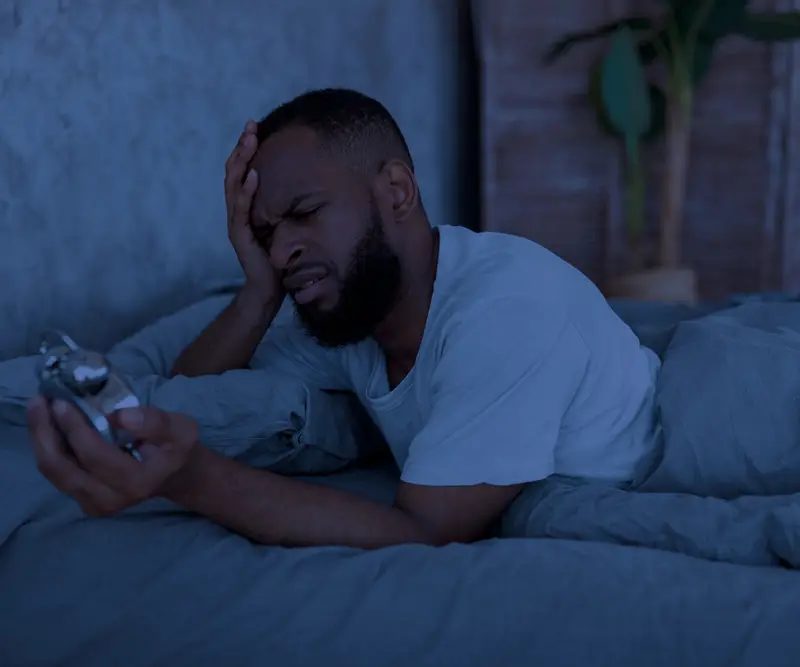
When you’re lying in bed wide awake after an argument…
On any given night, 1 in 3 individuals struggle with sleep for a variety of reasons, including unresolved conflict and feelings after a bad argument.
You’re not the first to lay in bed WIDE AWAKE after a heated exchange whether it’s with a spouse or partner…
(Or even a child, parent, or friend.)
It could be a disagreement over money, politics, values, unresolved grievances, or a myriad of other issues.
All the same, arguments are par for the course for couples.
In fact, 90% of Americans in a serious relationship argue with a significant other at least occasionally, according to a YouGov poll.
My guess is you’ll find similar numbers in many other countries,.
But what we’re really talking about is what happens after a BAD argument…so bad you just can’t fall asleep.
Look online and you’ll find plenty of individuals desperate for answers.
Here’s a reddit thread where someone is sharing it’s almost 2am, their heart is racing, and they’re sick to their stomach.
THEY JUST CAN’T GET IT OFF THEIR MIND.
Or this lady in a Quora thread who can’t sleep after fighting with her boyfriend. She’s tried meditation, melatonin, reading, and various other things all to no avail.
So, you’re certainly not the first and we’ve all been there one time or another.
Well, as bad as things may seem in the moment, there’s hope.
Let’s talk about why it’s such a sleep killer and what you can do about it.
For every minute you remain angry, you give up sixty seconds of peace of mind.
-Ralph Waldo Emerson
Why is it so hard to sleep after an argument?
Did you know stress and anxiety are among the biggest sleep killers for sleep?
A racing mind makes it hard to drift off to sleep…
And as you get more and more agitated, your body turns on the fight-or-flight response and pumps out stress hormones designed to get you in a heightened state of arousal and prepare your muscles for action.
This hyperarousal is why stress and anxiety from unresolved conflict are so bad at night – it’s harder to fall asleep AND harder to stay asleep.
And there’s nothing like an argument to get you stressed and anxious, especially if you’re just left to your thoughts close to bedtime.
Like squirrels running around your head…
Studies like this one with married employed women show that arguments and negative interpersonal conflicts can SIGNIFICANTLY elevate heart rate and blood pressure.
Likewise, research shows that interpersonal and psychological conflict impacts men’s sleep too.
But of course, many of us already know that from personal experience…right?
Unfortunately, sleep-deprived individuals are more likely to experience conflict.
If you’re not careful, you can get into a downward spiral of poor sleep and arguments where one causes more of the other
All the things sleeplessness does to a relationship
When you’re sleepless after a bad argument, fatigue is not the only thing you’re up against. Unfortunately, poor sleep can affect health, wellness, and relationships in a myriad of ways.
For starters, sleep-deprived people struggle with poor focus and forgetfulness.
They may have a harder time participating in normal activities, including household chores and social outings…
And struggle with overall self-care.
Did you know poor is bad for emotional regulation too?
Yep, this is why we’re sometimes moodier when tired.
Also, when tired, you’re more likely to misread each other.
Making it more likely to get into arguments…and lose sleep.
Emotional intimacy can suffer due to poor communication, irritation, anger, and stress.
Physical intimacy can suffer due to suppressed sex hormones, erectile dysfunction for men, and low energy. (In some cases, one partner may withhold sex as a means to express anger or assert power.)
All of that because you’re not sleeping.
Talk about a catch-22…
Two in five Americans have ended a relationship over their ex-partner’s poor sleeping habits
Source: Talker Research, 2026
Studies examining the interconnections between sleep, anger, and relationships confirm what we know from personal experience – unresolved anger and decreased relationship satisfaction can sabotage a relationship.
But it doesn’t have to be that way.
So, why can my spouse sleep after an argument?
Ok, this is a question that comes up often.
We’ve all been there at one point or another.
You’ve just had a pretty emotional exchange…
And your spouse or partner is SLEEPING PEACEFULLY like a baby while you’re lying in bed WIDE AWAKE.
Such as in this reddit thread here where someone who’s been married for 8 years is complaining that their husband will not make any effort to fix things before bed.
She says he just falls asleep immediately with no care in the world…
So why are some individuals able to sleep while others can’t?
It may seem like a sign that they don’t care or have given up, but there are other reasons.
For starters, people respond differently to conflict due to individual differences.
Some are just more naturally resilient after an argument due to their unique nervous system and coping mechanisms.
Also, some individuals can disconnect emotionally and physically better than a spouse or partner.
While for others it’s just harder to get out the fight-or-flight response and stop replaying the argument.
Everyone has their own way of dealing with things and can disassociate from conflict in different ways whether it’s worrying, eating, sleeping, or closing down.
Ever felt too angry to sleep?
Okay, we’ve talked about how an argument can leave you stressed and anxious at bedtime.
It can also leave you feeling too sad to sleep…
Or even feeling too angry to sleep
You’re lying in bed replaying a movie of the argument…blow by blow.
There’s a feeling that something has happened that is unjust or that things are not going your way.
(At least that’s the way it sometimes feels in the moment.)
Well, there’s a strong connection between unresolved anger and poor sleep quality.
And the causes of unresolved anger can run deeper than the argument you just had.
There could be other underlying issues such as:
- Feeling wronged or unfairly treated
- Feeling powerless
- Feeling disrespected or humiliated
- Fear or anxiety underneath the anger
- Unexpressed resentment
- Feeling unheard
- Accumulated stress
- Family of origin issues
All the same, unresolved anger and bitterness are not good for sleep or life in general.
So, let’s now take a look at what you can do to get your nights and days back on track.
10 Things to do in the moment to get your sleep back on track
Okay, now we get to the good news.
As bad as things seem, there’s plenty you can do to get out of the “fight-or-flight” mode if you’re struggling to sleep after an argument:

1) Self-Compassion
Believe it or not, everything starts from here. Treat yourself with kindness, understanding, and forgiveness instead of self-criticism.
Don’t beat yourself up over what you said or how you reacted. Conflict and emotional reactions are part of being human.

2) Let go of the idea you must get to sleep
It’s easy to get increasingly anxious about sleep as the hours ticks away. This can heighten the body’s stress response and make sleep even harder.
Instead of worrying about how late it is, let go of the idea you must fall asleep and focus on simple things you can do to nurture yourself, including self-compassion.

3) Get it off your mind
Spend 5 minutes writing down unresolved thoughts then put the paper away. This gives your brain somewhere to store them.

4) Move to a different room
If being in the same room is too upsetting, go to another room to relax until you feel tired enough to fall asleep.

5) Take a Deep Breath
Breathing exercises are a powerful way to relax the body and promote sleep. Slower breaths can signal relaxation and lower heart rate.
Also, did you know that different emotions are associated with different ways of breathing. By consciously changing how we breathe, we can change how we feel!
Simple exercises such as the 4-7-8 breathing technique, pioneered by Dr. Andrew Weil, involve regulating your breathing to various counts of 4, 7 and 8.
Learn more:
4-7-8 breathing demo from Dr. Weil (Video)
How to use 4-7-8 breathing for anxiety (MedicalNewsToday)
8 Breathing Exercises to Try When You Feel Anxious (Healthline)

6) Calming music
Did you know studies show that music can help individuals fall asleep faster and sleep better? The right music can lower stress hormones and boost feel good hormones.

7) Try distraction
There are plenty of things you do to distract the mind from stress and anxiety. The key is to avoid anything too stimulation that may make it even harder to sleep.

8) Visualization
This is a mental technique that’s widely used to relieve stress. The goal is to shift your focus from anxious thoughts to peaceful and restful imagery.
Learn more:
The Benefits of Guided Imagery and How To Do It (healthline)
What to know about guided imagery (Medical News Today)

9) Get up and do something
Sometimes lying in bed worrying about getting to sleep makes things worse. Instead, you may want to get up and leave the bedroom for a while.
Get up and do something mindless like washing the dishes.

10) Take a warm bath or shower
Did you know your body temperature naturally dips at night before bedtime? It’s one of the things that can signal your body it’s time for sleep.
A warm bath or shower can help you relax while raising your body temperature. When finished you return to a cooler bedroom and get a temperature drop saying it’s time to sleep.
Getting to the root of the issue and a better place
According to a YouGov survey of US adults, most couples argue or experience disagreement in their relationships.
Again, it’s a natural part of relationships.
Let’s talk about what you can do going forward to keep arguments from ruining your sleep.
Establish some house rules
Agree to avoid discussing difficult topics too close to bed time. Instead, pick an earlier time and location that works for both of you.
You may want to even schedule one day a week to have time to talk about things on your mind.
Work on your communication
When dealing with difficult topics, honestly share with each other where you’re at and what you need from each other.
Also, would you believe a study found that way you start a difficult conversation predicts its outcome 96% of time based on the First Three Minutes of interaction?
When talking about difficult topics:
• Check your expectations, start with the right attitude
• Think about how you’ll begin and start on the right foot
• Plan what you want to say
• Show respect
• Be specific
• Stay on topic
• Express your feelings constructively
• Listen without being defensive
• Don’t forget to share positive feelings too!
Spousal self-care
Do what you can to support one another’s sleep, health, and wellness. Find time to do things you enjoy.
It’s okay to do things alone or hang out with friends.
Relaxation exercises
Meditation and other relaxation practices are a great way to lower emotional reactivity to relationship triggers, build empathy, and improve conflict communication.
Some things to try:
Loving-Kindness Meditation (verywell mind)
Box Breathing (Cleveland Clinic)
STOP pause method (Calm.com)
Counseling
With feelings running high, it may be hard to sort through things, especially if you’re sleep deprived. Tough times can also bring to the surface issues that may have been on a low simmer.
If needed, get help from a couples’ therapist or even just yourself.
It could be helpful in finding strategies more specific to your situation, especially if you’re not making any headway.
Support groups
Depending on your situation, this can be a great place to learn and get encouragement from other people in your shoes.
Connect with us:
About Us
Better Sleep Simplified® was founded as a place for you to get clear and well-researched information.
Our goal is to make sure you know about your options so that you take action sooner rather than later.
Check us out on YouTube:
Watch and Learn
Helpful sleep tips, interesting sleep facts and statistics you want to know about
Affiliate Disclosure
This site is a participant in the Amazon Services LLC Associates Program and other affiliate advertising programs designed to provide a means for sites to earn advertising fees by advertising and linking to them.
Important: BetterSleepSimplified.com is for informational purposes only and is not intended or implied to be a substitute for professional medical advice, diagnosis, or treatment. Always consult a physician for sleep and health concerns. See additional information.